
Richard Curtis: Comedy's saint
The founder of Comic Relief and the writer of 'Four Weddings' and 'Notting Hill' is everybody's Mr Nice. Can he really be that good?
7 March 2009
independent.co.uk[/align]
It was in the Philippines that the young Richard Curtis had his first charitable impulse. His father was a businessman working for Unilever and the family home in Manila ran to a swimming pool and a chauffeur. As Richard was being driven home from school, he used to watch through the car window as the massive slums unfolded, and saw people under corrugated iron roofs, living on nothing. His parents, however, showed him how some people responded to the existence of poverty. "My mother cancelled Christmas in 1968. No presents. No special food. We gave all the money to the Biafra appeal. I was thrilled because it meant I could watch Top of the Pops, which was normally spoiled by Christmas lunch lasting for ever."
In its combination of charity, television, pop and domestic humour, this is a very Richard Curtis story of heroic altruism 17 years before he launched Comic Relief in response to famine in Ethiopia in 1985. To date, the comic-sketches-and-tragic-footage charity has raised upwards of £600m and lifted the spirits of the nation by such stratagems as having Tony Blair (in 2007) utter the catchphrase "Am I bovvered?" in a riotous exchange with Catherine Tate's motor-mouthed teenager Lauren.
Comic Relief's 2009 Red Nose Day (it's been going since 1988) takes over the BBC airwaves next Friday. You cannot have missed its imminence. There have been comic plugs on the radio, urgings to "Do something funny for money", plastic red noses in Sainsbury's, celebrities climbing Mount Kilimanjaro and the insistence everywhere that you "Get involved". Millions of people will do so. Others will find the emphatic, all-join-in tone of Curtis's charity a tad too strident, just as many people carp at the bourgeois sweetness of his romantic movies. But what problem do they have with a man whose life seems dedicated to charity, humour, decency, truth, friendship, joy and delight? What's not to like about Richard Curtis?
He is, after all, a god-like figure in the British film, TV and light entertainment industry as well as the charity world. Or, if not a god, a king – namely Midas. Every film he scripted since Four Weddings and a Funeral has made more than $200m. Four Weddings (1994) became the biggest-grossing British film in history, until it was eclipsed in that title by his Notting Hill, five years later. He has never had a flop. His directorial debut, Love Actually, with its multiple storylines and Christmas setting, made for $45m, took $247m worldwide.
The secret of his success as a writer seems simple: keep it positive, light, enthusiastic, romantic. The world of Curtis's imagination is a fine place to be. Its middle-class inhabitants aren't exactly young or old, but exude an age-less friendliness and wry amusement towards each other. They fall in love awkwardly, unexpectedly or inconveniently and their paths to bliss are strewn with easily solvable muddles involving other people. There's always a plucky invalid, a subtitled conversation, a cabal of jolly, supportive pals, someone dashing to the airport to declare their love for someone else, and a rosy, cosy glow that everything will work out fine.
It's the upbeat niceness, the cute Englishness of its set-ups and assumptions, that gets up the nose of some of the more po-faced critics. "The film's governing idea of love is both shallow and dishonest," wrote A O Scott of Love Actually in The New York Times, "and its sweet, chipper demeanour masks a sour cynicism about human emotions that is all the more sleazy for remaining unacknowledged. It has the calloused, leering soul of an early-60s Rat Pack comedy, but without the suave, seductive bravado," while Variety judged it, "a package that feels as luxuriously appointed and expertly tooled as a Rolls-Royce."
Curtis is conscious that he works unfashionable seams of virtue. "I really do believe that there is a tremendous amount of optimism, goodness and love in the world," he told New Humanist magazine last year, "and that it is under-represented. The dark side is always dominant ...You write a play about a soldier going Awol and stabbing a single mother and they say it is a searing indictment of modern British society. Whereas you write a play about a guy falling in love with a girl, which happens a million times a day in every corner of the world, and it's called blazingly unrealistic sentimental rubbish."
His new movie, The Boat That Rocked, is set in 1966, when Curtis was 10 and pirate radio ruled the wavelengths, blasting 24-hour rock'n'roll and Tamla Motown into British transistors at a time when the BBC Light Programme preferred jazz or novelty songs. The titular boat is Radio Rock, a version of the key pirate ship Radio Caroline, and the DJs spinning the subversive vinyl are a bunch of zany funsters played by Philip Seymour Hoffman, Nick Frost, Rhys Ifans, Chris O'Dowd and Rhys Darby. Bill Nighy, who shone as the re-tooled rocker in Love Actually, plays Quentin, the boat's languid owner, and among the perky love-interest dollies are January Jones (from Mad Men) and Gemma Arterton and Tallulah Riley (from St Trinian's.)
Curtis admits that gritty realism about the radio ships wasn't his chief preoccupation. His main concern wasn't the boat at all. "I think I'm trying to reproduce the feelings I had while listening to Madness or Abba or the Beatles or the Kinks," he says in the April issue of Empire. "That sense you get in pop music of high spirits and elevation and joy and things working out."
Essentially it's a film about friendship. The film pits the pirates against the politicians who want to close them down (especially Kenneth Branagh) by means of the hastily drafted Marine Offences Act, and is full of laddish jokes. Rather than a rom-com, it's a mates-com: the DJs are like a bunch of noisy teenage pals, luxuriating in youth, freedom and the advent of drugs and sex. There's notably more sex in the new movie than in Curtis's others. "I don't avoid nudity," he says, "because I remember how much it mattered to me when I was 15, how utterly thrilled I was when a person in the movies took their clothes off."
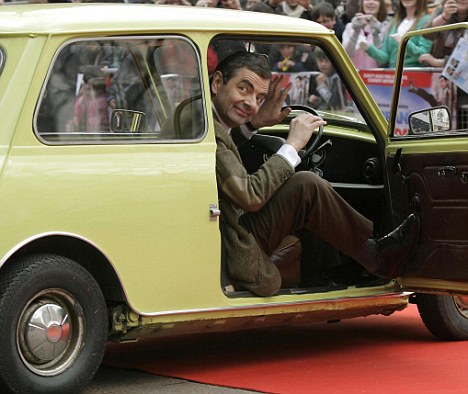
He was born in New Zealand in 1956 and schooled in several countries. Arriving in England, he won a scholarship to Harrow and picked up a first in English at Christ Church, Oxford. There he met Rowan Atkinson, with whom he started writing sketches for Not the Nine O'Clock News, displaying a flair for comic songs. He and Atkinson collaborated on Blackadder (Curtis worked on every episode), on Bean, and Curtis's first movie script, The Tall Guy, in which Atkinson played a nasty comedian and Jeff Goldblum romanced Emma Thompson. The film was produced by Working Title, with whom Curtis has remained as its star performer. Today he lives in Suffolk and London with the broadcaster Emma Freud and their four children.
Curtis tends to bring up his father's name when talking about virtue or sentimentality. "What is wrong with being touched by what goes on around you?" he asks. "I am very touched by what is good and true. It's a family characteristic. It was very true of my dad in his final years. Whenever he talked of an act of kindness, I can remember the tears in his eyes." Such invocations of decency infuriate his critics, who refer to Comic Relief as "St Richard Curtis and his millionaire disciples", and complain about his political naivety, as if the act of raising millions for a malaria charity was merely a believer's way of salving a guilty conscience.
Saint Richard, however, isn't at all religious: he stopped believing in God before going to Oxford. ("I thought, well, either God doesn't exist or he is thoroughly nasty, in which case I am not interested in worshipping him.") About those who think this talented, funny, hard-working, money-spinning and amazingly effective man is driven by impulses of image-making or greed, he is equally brisk. "I believe that cynical people believe that everyone else is cynical. They regard non-cynical people as simply ultra-cynical. So cynics who watch Love Actually think it is a cynical attempt to make money. No amount of evidence could prove to them that it ever had anything to do with goodwill." And anyway, he points out with a touch of asperity, "Cynics Nose Day hasn't raised any money yet."
A life in brief
Born: Richard Whalley Anthony Curtis, 8 November 1956, in New Zealand.
Early life: As a child Curtis lived in New Zealand, the Philippines, and Sweden. Graduated from Oxford University with a first-class degree in English.
Family Life: Son of Anthony, a Unilever executive and Glyness. He lives in London and Suffolk with Emma Freud, and their four children.
Career: Started as the chief writer on Not the Nine O'Clock News before writing Mr Bean and The Vicar of Dibley. Rose to fame with his scripts for Four Weddings and a Funeral (1994) and Notting Hill (1999). He founded Comic Relief and Make Poverty History.
He says: "I think it's a responsibility of people who have had very lucky lives to try to spread some of that around."
They say: "Richard has the rare gift of being able to mingle comedy with tragedy. Hardly anyone else can do that." Bill Nighy