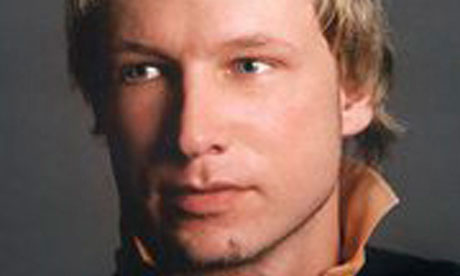
Slavoj Zizek

Politics for the non-conservative...
Post Reply
User avatar
faceless
Posts: 26489
Joined: Tue Apr 25, 2006 6:16 pm

Slavoj Zizek

Post by faceless »


Slavoj Zizek - Riz Khan - 2010-11-10
I was told about this guy from a Swedish member a while back and I meant to start a thread about him then, but I forgot, so here's the start.

If you see anything substantial featuring the guy, feel free to post it in this thread.
Last edited by faceless on Thu Oct 23, 2014 9:41 pm, edited 4 times in total.
User avatar
major.tom
Macho Business Donkey Wrestler
Posts: 1970
Joined: Sun Jan 21, 2007 7:07 pm
Location: BC, Canada

Post by major.tom »

He appeared on stage with Amy Goodman and Julian Assange a couple weeks ago in London. The Q&A was covered on Democracy Now.
User avatar
faceless
Posts: 26489
Joined: Tue Apr 25, 2006 6:16 pm

Post by faceless »

Image
A vile logic to Anders Breivik's choice of target
Like Pim Fortuyn before him, Breivik embodies the intersection between rightist populism and liberal political correctness
Slavoj Žižek
guardian.co.uk,
8th August 2011
In Anders Behring Breivik's ideological self-justification as well as in reactions to his murderous act there are things that should make us think. The manifesto of this Christian "Marxist hunter" who killed more than 70 people in Norway is precisely not a case of a deranged man's rambling; it is simply a consequent exposition of "Europe's crisis" which serves as the (more or less) implicit foundation of the rising anti-immigrant populism – its very inconsistencies are symptomatic of the inner contradictions of this view.

The first thing that sticks out is how Breivik constructs his enemy: the combination of three elements (Marxism, multiculturalism and Islamism), each of which belongs to a different political space: the Marxist radical left, multiculturalist liberalism, Islamic religious fundamentalism. The old fascist habit of attributing to the enemy mutually exclusive features ("Bolshevik-plutocratic Jewish plot" – Bolshevik radical left, plutocratic capitalism, ethnic-religious identity) returns here in a new guise.

Even more indicative is the way Breivik's self-designation shuffles the cards of radical rightist ideology. Breivik advocates Christianity, but remains a secular agnostic: Christianity is for him merely a cultural construct to oppose Islam. He is anti-feminist and thinks women should be discouraged from pursuing higher education; but he favours a "secular" society, supports abortion and declares himself pro-gay.

His predecessor in this respect was Pim Fortuyn, the Dutch rightist populist politician who was killed in early May 2002, two weeks before elections in which he was expected to gain one fifth of the votes. Fortuyn was a paradoxical figure: a rightist populist whose personal features and even opinions (most of them) were almost perfectly "politically correct". He was gay, had good personal relations with many immigrants, displayed an innate sense of irony – in short, he was a good tolerant liberal with regard to everything except his basic stance towards Muslim immigrants.

What Fortuyn embodied was thus the intersection between rightist populism and liberal political correctness. Indeed, he was the living proof that the opposition between rightist populism and liberal tolerance is a false one, that we are dealing with two sides of the same coin: ie we can have a racism which rejects the other with the argument that it is racist.

Furthermore, Breivik combines Nazi features (also in details – for example, his sympathy for Saga, the Swedish pro-Nazi folk singer) with a hatred of Hitler: one of his heroes is Max Manus, the leader of the Norway anti-Nazi resistance. Breivik is not so much racist as anti-Muslim: all his hatred is focused on the Muslim threat.

And, last but not least, Breivik is antisemitic but pro-Israel, as the state of Israel is the first line of defence against the Muslim expansion – he even wants to see the Jerusalem temple rebuilt. His view is that Jews are OK as long as there aren't too many of them – or, as he wrote in his manifesto: "There is no Jewish problem in western Europe (with the exception of the UK and France) as we only have 1 million in western Europe, whereas 800,000 out of these 1 million live in France and the UK. The US, on the other hand, with more than 6 million Jews (600% more than Europe) actually has a considerable Jewish problem." He realises the ultimate paradox of a Zionist Nazi – how is this possible?

A key is provided by the reactions of the European right to Breivik's attack: its mantra was that in condemning his murderous act, we should not forget that he addressed "legitimate concerns about genuine problems" – mainstream politics is failing to address the corrosion of Europe by Islamicisation and multiculturalism, or, to quote the Jerusalem Post, we should use the Oslo tragedy "as an opportunity to seriously re-evaluate policies for immigrant integration in Norway and elsewhere". The newspaper has since apologised for this editorial. (Incidentally, we are yet to hear a similar interpretation of the Palestinian acts of terror, something like "these acts of terror should serve as an opportunity to re-evaluate Israeli politics".)

A reference to Israel is, of course, implicit in this evaluation: a "multicultural" Israel has no chance to survive; apartheid is the only realistic option. The price for this properly perverse Zionist-rightist pact is that, in order to justify the claim to Palestine, one has to acknowledge retroactively the line of argumentation which was previously, in earlier European history, used against the Jews: the implicit deal is "we are ready to acknowledge your intolerance towards other cultures in your midst if you acknowledge our right not to tolerate Palestinians in our midst".

The tragic irony of this implicit deal is that, in the European history of last centuries, Jews themselves were the first "multiculturalists": their problem was how to survive with their culture intact in places where another culture was predominant.

But what if we are entering an era where this new reasoning will impose itself? What if Europe should accept the paradox that its democratic openness is based on exclusion – that there is "no freedom for the enemies of freedom", as Robespierre put it long ago? In principle, this is, of course, true, but it is here that one has to be very specific. In a way, there was a vile logic to Breivik's choice of target: he didn't attack foreigners but those within his own community who were too tolerant towards intruding foreigners. The problem is not foreigners, it is our own (European) identity.

Although the ongoing crisis of the European Union appears as a crisis of economy and finances, it is in its fundamental dimension an ideologico-political crisis: the failure of referendums about the EU constitution a couple of years ago gave a clear signal that voters perceived the EU as a "technocratic" economic union, lacking any vision which could mobilise people – until the recent protests, the only ideology able to mobilise people was the anti-immigrant defence of Europe.

Recent outbursts of homophobia in eastern European post-communist states should also give us pause for thought. In early 2011, there was a gay parade in Istanbul where thousands walked in peace, with no violence or other disturbances; in gay parades which took place at the same time in Serbia and Croatia (Belgrade, Split), police were not able to protect participants who were ferociously attacked by thousands of violent Christian fundamentalists. These fundamentalists, not Turkey's, are the true threat to the European legacy, so when the EU basically blocked Turkey's entry, we should ask the obvious question: what about applying the same rules to eastern Europe?

Antisemitism belongs to this series, alongside other forms of racism, sexism, homophobia, etc. The state of Israel is here making a catastrophic mistake: it decided to downplay, if not completely ignore, the "old" (traditional European) antisemitism, focusing instead on the "new" and allegedly "progressive" antisemitism masked as the critique of the Zionist politics of the state of Israel. Along these lines, Bernard Henri-Lévy (in his Left in Dark Times) recently claimed that the antisemitism of the 21st century would be "progressive" or not exist at all. This thesis compels us to turn around the old Marxist interpretation of antisemitism as a mystified anti-capitalism (instead of blaming the capitalist system, the rage is focused on a specific ethnic group accused of corrupting the system): for Henri-Lévy and his partisans, today's anti-capitalism is a disguised form of antisemitism.

This unspoken but no less efficient dismissal of those who would attack the "old" antisemitism is taking place at the very moment when the "old" antisemitism is returning all around Europe, especially in post-communist eastern European countries, from Hungary to Latvia. Something that should worry us even more is the rise of a weird accommodation between Christian fundamentalists and Zionists in the US.

There is only one solution to this enigma: it is not that the US fundamentalists have changed, it is that Zionism itself has paradoxically come to adopt some antisemitic logic in its hatred of Jews who do not fully identify with the politics of the state of Israel. Their target, the figure of the Jew who doubts the Zionist project, is constructed in the same way as the European antisemites constructed the figures of the Jew – he is dangerous because he lives among us, but is not really one of us. Israel is playing a dangerous game here: Fox News, the main US voice of the radical right and a staunch supporter of Israeli expansionism, recently had to demote Glenn Beck, its most popular host, whose comments were getting openly antisemitic.

The standard Zionist argument against the critics of the policies of the state of Israel is that, of course, like every other state, Israel can and should be judged and eventually criticised, but that the critics of Israel misuse the justified critique of Israeli policy for antisemitic purposes. When the Christian fundamentalist supporters of the Israeli politics reject leftist critiques of Israeli policies, their implicit line of argument is illustrated by a wonderful cartoon published in July 2008 in the Viennese daily Die Presse: it shows two stocky, Nazi-looking Austrians, one of them holding in his hands a newspaper and commenting to his friend: "Here you can see again how a totally justified antisemitism is being misused for a cheap critique of Israel!" These are today's allies of the state of Israel.
User avatar
faceless
Posts: 26489
Joined: Tue Apr 25, 2006 6:16 pm

Post by faceless »


Slavoj Zizek - Al Jazeera
The philosopher discusses the momentous changes taking place in the global financial and political system.
13 Nov 2011
From the Middle East to the streets of London and cities across the US there is a discontent with the status quo. Whether it is with the iron grip of entrenched governments or the widening economic divide between the rich and those struggling to get by. But where are those so hungry for change heading? How profound is their long-term vision to transform society?

Slovenian-born philosopher Slavoj Zizek, whose critical examination of both capitalism and socialism has made him an internationally recognised intellectual, speaks to Al Jazeera's Tom Ackerman about the momentous changes taking place in the global financial and political system. In his distinct and colourful manner, he analyses the Arab Spring, the eurozone crisis, the "Occupy Wall Street" movement and the rise of China. Concerned about the future of the existing western democratic capitalism Zizek believes that the current "system has lost its self-evidence, its automatic legitimacy, and now the field is open."

"I think today the world is asking for a real alternative. Would you like to live in a world where the only alternative is either anglo-saxon neoliberalism or Chinese-Singaporean capitalism with Asian values? I claim if we do nothing we will gradually approach a kind of a new type of authoritarian society. Here I see the world historical importance of what is happening today in China. Until now there was one good argument for capitalism: sooner or later it brought a demand for democracy... What I'm afraid of is with this capitalism with Asian values, we get a capitalism much more efficient and dynamic than our western capitalism. But I don't share the hope of my liberal friends - give them ten years, [and there will be] another Tiananmen Square demonstration - no, the marriage between capitalism and democracy is over."
Last edited by faceless on Thu Oct 23, 2014 9:55 pm, edited 2 times in total.
User avatar
major.tom
Macho Business Donkey Wrestler
Posts: 1970
Joined: Sun Jan 21, 2007 7:07 pm
Location: BC, Canada

Post by major.tom »


Slavoj Zizek - Examined Life
User avatar
faceless
Posts: 26489
Joined: Tue Apr 25, 2006 6:16 pm

Post by faceless »

Fat-free chocolate and absolutely no smoking: why our guilt about consumption is all-consuming
From fear of being seen smoking to Starbucks' 'coffee karma', we've arrived at a cultural impasse as consumers. As 2014's Prix Pictet photography prize tackles the theme of consumption, Slavoj Žižek traces how we've ended up buying into lifestyles rather than living our lives
Slavoj Žižek
Wed 21 May 2014
During a recent visit to California, I attended a party at a professor's house with a Slovene friend, a heavy smoker. Late in the evening, my friend became desperate and politely asked the host if he could step out on the veranda for a smoke. When the host (no less politely) said no, my friend suggested that he step out on to the street, and even this was rejected by the host, who claimed such a public display of smoking might hurt his status with his neighbours … But what really surprised me was that, after dinner, the host offered us (not so) soft drugs, and this kind of smoking went on without any problem – as if drugs are not more dangerous than cigarettes.

This weird incident is a sign of the impasses of today's consumerism. To account for it, one should introduce the distinction between pleasure and enjoyment elaborated by the psychoanalyst Jacques Lacan: what Lacan calls jouissance (enjoyment) is a deadly excess beyond pleasure, which is by definition moderate. We thus have two extremes: on the one hand the enlightened hedonist who carefully calculates his pleasures to prolong his fun and avoid getting hurt, on the other the jouisseur propre, ready to consummate his very existence in the deadly excess of enjoyment – or, in the terms of our society, on the one hand the consumerist calculating his pleasures, well protected from all kinds of harassments and other health threats, on the other the drug addict or smoker bent on self-destruction. Enjoyment is what serves nothing, and the great effort of today's hedonist-utilitarian "permissive" society is to tame and exploit this un(ac)countable excess into the field of (ac)counting.

Enjoyment is tolerated, solicited even, but on condition that it is healthy, that it doesn't threaten our psychic or biological stability: chocolate, yes, but fat-free; Coke, yes, but diet; coffee, yes, but without caffeine; beer, yes, but without alcohol; mayonnaise, yes, but without cholesterol; sex, yes, but safe sex …

So, what is going on here? In the last decade or so there has been a shift in the accent of marketing, a new stage of commodification that the economic theorist Jeremy Rifkin designated "cultural capitalism". We buy a product – an organic apple, say – because it represents the image of a healthy lifestyle. As this example indicates, the very ecological protest against the ruthless capitalist exploitation of natural resources is already caught in the commodification of experiences: although ecology perceives itself as the protest against the virtualisation of our daily lives and advocates a return to the direct experience of sensual material reality, ecology itself is branded as a new lifestyle. What we are effectively buying when we are buying "organic food" etc is already a certain cultural experience, the experience of a "healthy ecological lifestyle".

And the same goes for every return to "reality": in a publicity spot widely broadcast in the US a decade or so ago, a group of ordinary people was shown enjoying a barbecue with country music and dancing, with the accompanying message: "Beef. Real food for real people." The irony is that the beef offered here as the symbol of a certain lifestyle (the "real" grass-root working-class Americans) is much more chemically and genetically manipulated than the "organic" food consumed by an "artificial" elite.

What we are witnessing today is the direct commodification of our experiences themselves: what we are buying on the market is fewer and fewer products (material objects) that we want to own, and more and more life experiences – experiences of sex, eating, communicating, cultural consumption, participating in a lifestyle. Michel Foucault's notion of turning one's self itself into a work of art thus gets an unexpected confirmation: I buy my bodily fitness by way of visiting fitness clubs; I buy my spiritual enlightenment by way of enrolling in the courses on transcendental meditation; I buy my public persona by way of going to the restaurants visited by people I want to be associated with.

The anti-consumerist ecology is also a case of buying authentic experience. There is something deceptively reassuring in our readiness to assume guilt for the threats to our environment: we like to be guilty since, if we are guilty, it all depends on us. We pull the strings of the catastrophe, so we can also save ourselves simply by changing our lives.

What is really difficult to accept (at least for us in the west) is that we are reduced to the impotent role of a passive observer who can only sit and watch what his fate will be. To avoid such a situation, we are prone to engage in a frantic obsessive activity, recycling old paper, buying organic food, whatever, just so that we can be sure that we are doing something, making our contribution – like a soccer fan who supports his team in front of a TV screen at home, shouting and jumping from his seat, in a superstitious belief that this will somehow influence the outcome …

Is it not for the same reason that we buy organic food? Who really believes that the half-rotten and expensive "organic" apples are really healthier? The point is that, by buying them, we do not just consume a product – we simultaneously do something meaningful, show our caring selves and our global awareness and participate in a large collective project.

One should not fear denouncing sustainability itself, the big mantra of ecologists from the developed countries, as an ideological myth based on the idea of self-enclosed circulation where nothing is wasted. Upon a closer look, one can establish that "sustainability" always refers to a limited process that enforces its balance at the expense of its larger environs. Think about the proverbial sustainable house of a rich, ecologically enlightened manager, located somewhere in a green isolated valley close to a forest and lake, with solar energy, use of waste as manure, windows open to natural light, etc: the costs of building such a house (to the environment, not only financial costs) make it prohibitive to the large majority. For a sincere ecologist, the optimal habitat is a big city where millions live close together: although such a city produces a lot of waste and pollution, its per capita pollution is much lower than that of a modern family living in the countryside. How does our manager reach his office from his country house? Probably with a helicopter, to avoid polluting the grass around his house …

To recap, we thus primarily buy commodities neither on account of their utility nor as status symbols; we buy them to get the experience provided by them, we consume them in order to make our life pleasurable and meaningful.

Here is an exemplary case of "cultural capitalism": Starbucks' ad campaign "It's not just what you're buying. It's what you're buying into." After celebrating the quality of the coffee itself, the ad goes on: "But, when you buy Starbucks, whether you realise it or not, you're buying into something bigger than a cup of coffee. You're buying into a coffee ethic. Through our Starbucks Shared Planet programme, we purchase more Fair Trade coffee than any company in the world, ensuring that the farmers who grow the beans receive a fair price for their hard work. And, we invest in and improve coffee-growing practices and communities around the globe. It's good coffee karma. … Oh, and a little bit of the price of a cup of Starbucks coffee helps furnish the place with comfy chairs, good music, and the right atmosphere to dream, work and chat in. We all need places like that these days. When you choose Starbucks, you are buying a cup of coffee from a company that cares. No wonder it tastes so good."

The "cultural" surplus is here spelled out: the price is higher than elsewhere since what you are really buying is the "coffee ethic" that includes care for the environment, social responsibility towards the producers, plus a place where you yourself can participate in communal life.

This is how capitalism, at the level of consumption, has integrated the legacy of 1968, the critique of alienated consumption: authentic experience matters. A recent Hilton hotels ad consists of a simple claim: "Travel doesn't only get us from place A to place B. It should also make us a better person." Can one even imagine such an ad a decade ago? The latest scientific expression of this "new spirit" is the rise of a new discipline, "happiness studies" – how is it that, in our era of spiritualised hedonism, when the goal of life is directly defined as happiness, anxiety and depression are exploding?

Post Reply